
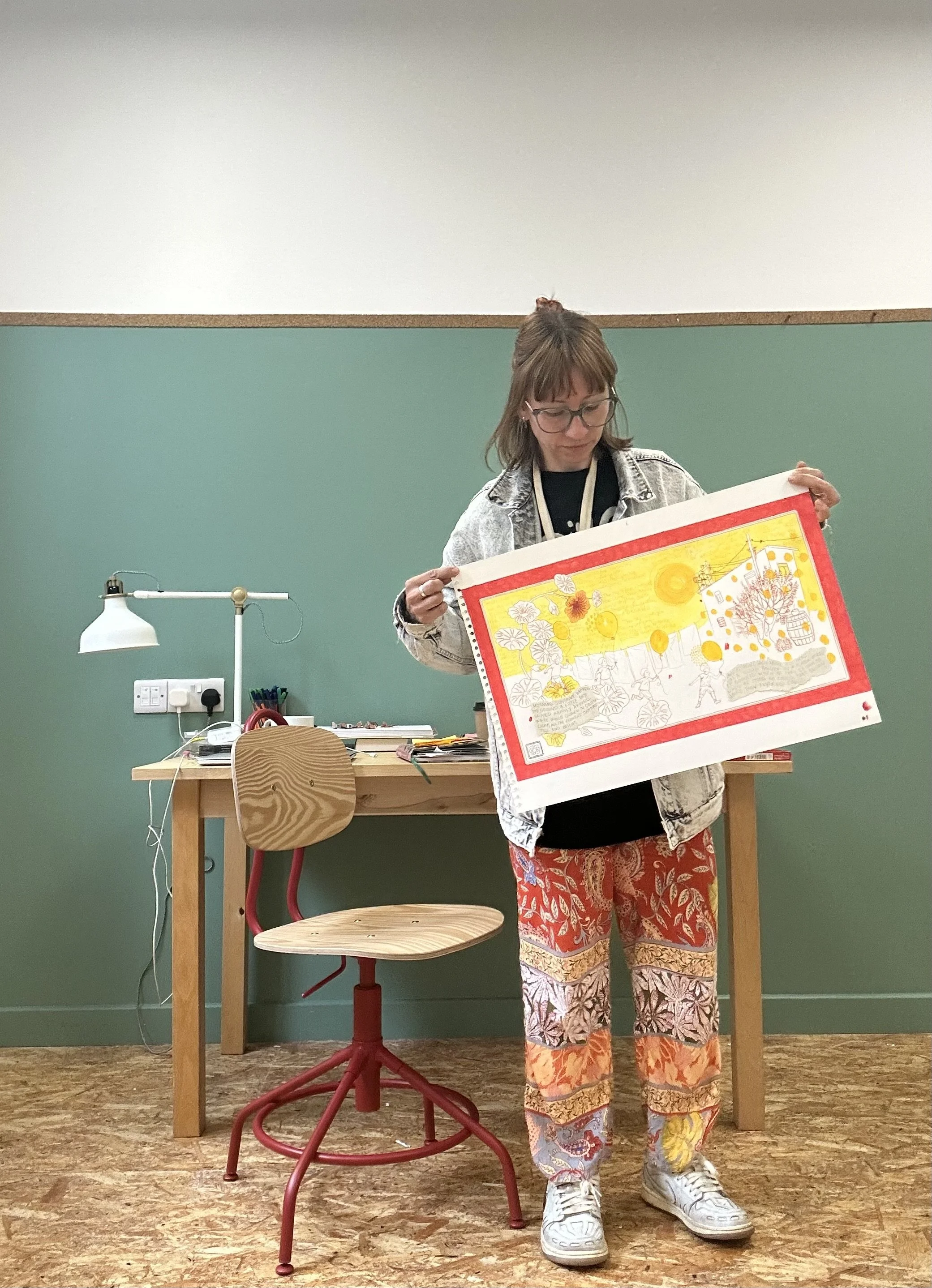
So many creative projects are quietly sacrificed because our primary role becomes mother, not creator. Being an artist, illustrator, or maker — especially when it comes to self-initiated work — often slips into second place.
I applied for the Nest art residency because there was no pressure to finish anything. No expectation of a polished outcome. No demand to produce something measurable. The only commitment was to practice art for art’s sake — and that felt radical.
Over the past six or seven years, I have started countless larger projects. None of them fully materialised. No series. No collection. No zine. No completed children’s picture book. Anything that required sustained time, deep focus, or long stretches of work simply could not fit into an already overflowing life.
I kept hearing the same advice: focus on the children — when they’re older, you can return to your art.
But why should creativity be postponed?
Why must motherhood mean stepping away from imagination, ideas, and personal expression?
Why can’t I be a wild, creative mother to my two wild creative children?
I had been carrying an idea for a book for nearly two years. I didn’t know whether it would lead anywhere. When I arrived at the residency, I made a quiet agreement with myself: I would not judge the work. I would not chase perfection. I would not punish myself for unfinished outcomes. I only needed a beginning.
For me, the hardest part is always overcoming the fear of the blank page. Starting a new sketchbook fills me with anxiety. Even a studio that feels too tidy or too ready can become intimidating. I wasn’t sure whether anything meaningful would emerge. I told myself I would be happy simply writing the story or discovering the main character.
I didn’t fully develop the characters.
But I hatched the egg.
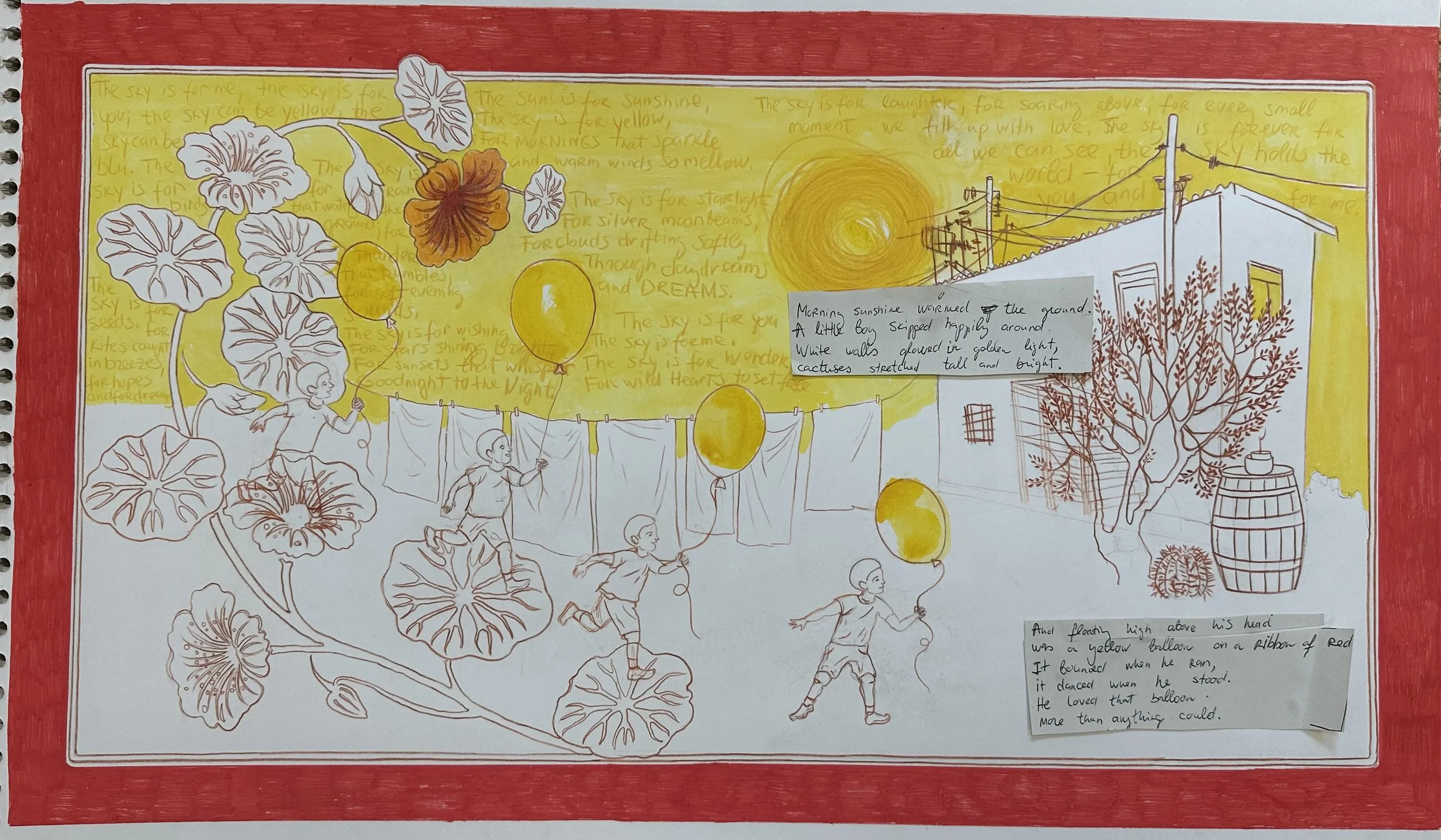
Despite struggling to switch off from everyday life — work routines, responsibilities, and the constant noise of unfinished projects — something shifted. I pulled a single thread out of the chaos in my head and placed it onto paper. I began mapping the stages of creating a children’s picture book, quickly felt overwhelmed, stepped back, and allowed myself to simply make marks. To sketch. To experiment. To play.
And then, unexpectedly, everything started to connect.
I realised I had been carrying this idea like an egg — fragile, protected, waiting. During the residency, it cracked open and moved in a direction that felt unmistakably mine: visually fresh, deeply intuitive, and surprisingly meditative. The process became joyful rather than pressured.
For the first time, I could clearly see the next steps.
I decided to approach the project differently. Instead of forcing productivity, I asked myself: Why not return to the place where the idea first appeared? Why not book a flight, pack a sketchbook, carry only a backpack, and spend a few days drawing alone?
The residency reminded me of something essential:
We need to take risks.
We need to experiment.
We need to commit.
We need to reflect.
We need to slow down, switch off, turn back on.
We need to make things — and also allow things to unfold.
Sometimes the most important achievement is not finishing the work, but allowing it to begin.